The 2010s were the decade of social media-led revolution. In the Arab world, Facebook helped to spread uprisings which overturned the old order, leading to success in Tunisia, failure in Egypt and tragedy in Syria.
In the US, social media has had almost as big an impact, with American progressive opinionundergoing a rapid shift from about 2013 whereas the average conservative has changed very little.
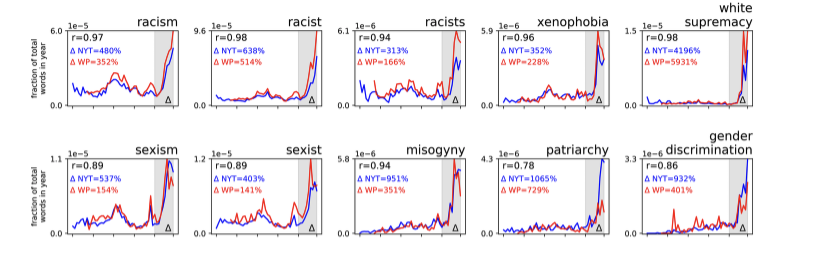
Perhaps that s related to the frequency they read about the issue,illustrated by a recent paper, which looks at media coverage of prejudice related terms . The study found the words racist or sexist increasing in usage between 2010 and 2019 by 638% and 403% in The New York Times or 514% and 141% respectively in The Washington Post. (This is a percentage of all words in those publications).
Frequency of words denoting prejudice in NYT and Washington Post. Credit: David Rozado
The paper also found that this process long predated Trump and that in 2014: The usage of words denoting racism, homophobia, transphobia or sexism were at or near, up to that year, all-time highs. These results suggest that the trend of increasing prevalence of prejudice related words in media discourse precedes the political emergence of Donald Trump although Trump s presidency and subsequent reactions to it may have exacerbated these trends.